
Ingredients guide
Vitamins and Minerals for Men, Explained
This guide covers the ingredients most often found in natural supplements for men, what each one does in ordinary terms, and where it appears in food. It is written for readers who want to understand a label before they buy, not for readers looking for a promise.
Every men's vitamin supplement leans on a short list
Labels vary, but the same handful of entries shows up again and again. Each ring below is one of them, closing like a day of a routine that is actually kept. Read the ring cards for what the nutrient does, then drop to the ledger for the food sources that cover it without any capsule at all.
Supports normal bone and muscle function. Sunlight is the main source for most people, and indoor work reduces exposure over time.
Fatty fish · egg yolks · fortified foods
A mineral that appears in many men's vitamin supplements, often beside magnesium and vitamin B6. The daily amount on a label is usually modest.
Meat · shellfish · seeds · legumes
Sold in several forms, and the label says which. Some men take it with an evening meal, others split it across the day.
Greens · nuts · seeds · whole grains
B6, B12, folate, niacin and riboflavin have normal roles in energy metabolism, which is why they appear in energy and endurance supplements.
Eggs · dairy · leafy greens · fortified cereals
Supports normal immune function and helps with iron absorption from plant foods. The label figure is usually modest.
Citrus · guava · papaya · local fruit
Both show up in mineral blends for active men, usually in small amounts. The useful question is whether the label states the amount and the form.
Brazil nuts · fish · eggs · whole grains
None of the six is rare, and none is a shortcut. What separates two products on a shelf is usually the amount per serving, the form, and whether the label is willing to print both.
Small amounts, and the label should say how small
Mineral blends aimed at active men often list selenium and chromium together with zinc and magnesium. In practice the amount per serving in these blends is small, so the entry is about completeness rather than volume. The relevant question is not whether an ingredient sounds useful, but whether the label states the amount and the form. A blend that names eight minerals and prints no figures gives you almost nothing to compare against a product that prints them all.
Names are easy; extract detail is the hard part
Ginger, turmeric, ginseng and green tea extract are the botany you will see most often in men's health support products. Turmeric contains curcumin, and labels usually state whether the extract is standardized. Ginseng products vary by root age and extract ratio, which is why two bottles with the same front label can differ a great deal inside.
When a label names a plant but gives no extract detail, you are comparing names rather than products. Ask the seller for the full panel if it is missing online, and treat a friendly reply as a good sign about how the rest of the range is documented. If you take prescribed medicine, ask a qualified professional before adding any botanical ingredient. That step is quick and it prevents avoidable problems.
Ask about an ingredientFood first, capsule second
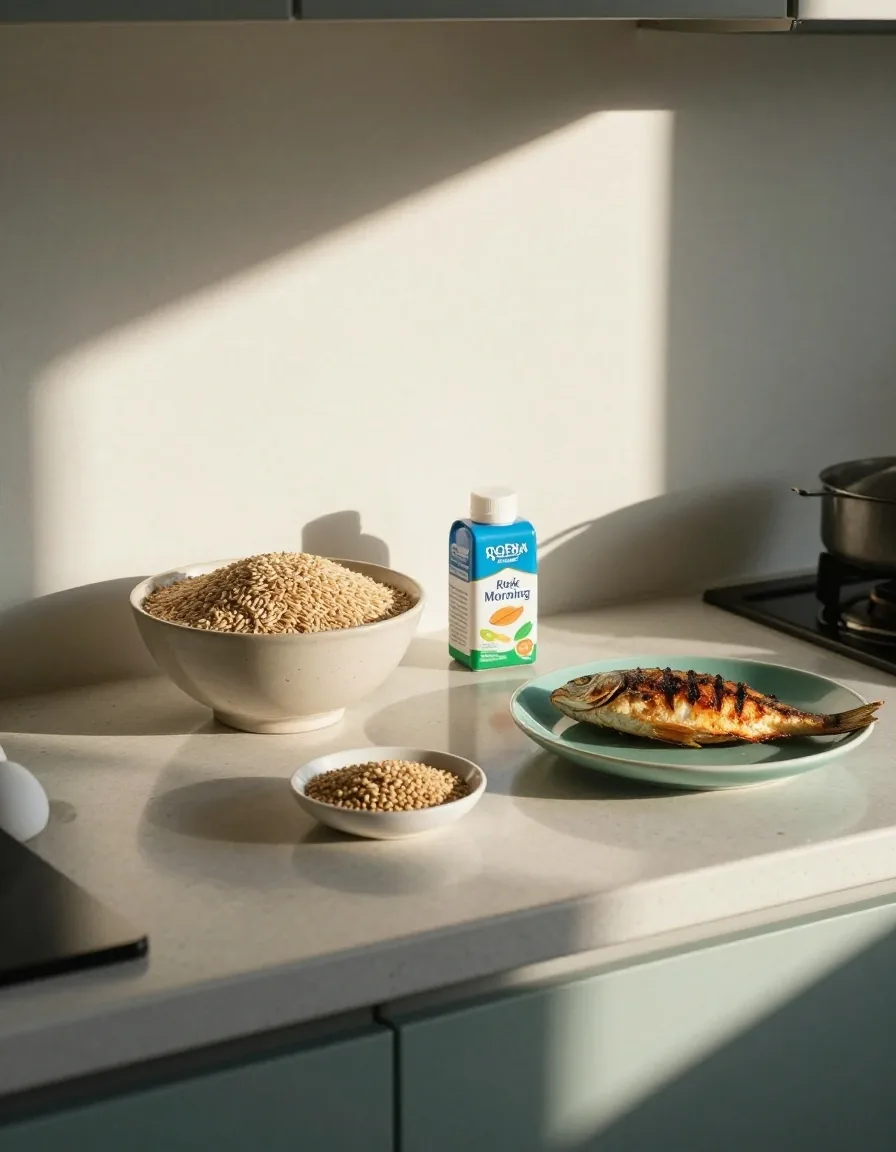
Most of the nutrients on this page come from ordinary food that is easy to buy in Jakarta. Fish, eggs, greens, fruit, nuts and whole grains cover a lot of ground. A capsule is useful when a specific gap exists and food alone is not closing it. That order matters, because it keeps the supplement in its proper size, which is small.


Four lines decide whether a label is worth your time
Start at the top: serving size. Then count servings per container. Read the amount per serving for each ingredient and check the unit. Those three moves do most of the work before you compare anything else.
Serving size and servings per container
Two capsules as one serving is common. A bottle of sixty then covers a month, or two weeks. This is the step where most label mistakes start.
Amount per serving and the unit
Milligrams and micrograms are not interchangeable, and a figure without a unit tells you nothing. Compare products only after the units line up.
Blends without individual amounts
A blend listed without itemised figures is a limit, not a feature. If the label uses the word proprietary in front of a blend, you will not know the individual amounts, and that should affect how you compare it to a product that prints them.
Allergen line and storage note
These two lines are short and easy to skip. They are also the fastest way to know whether the pack suits your kitchen and your routine.
Take far more than the serving line suggests and it stops being a shortcut.
Once these four habits are in place, comparing two bottles takes a couple of minutes. Keep the panel photograph on your phone if you shop in person — the printed figures are easier to check than a description you half remember.
Ingredients we flag for caution, and additions that are not nutrients
Two groups sit at the edges of a label: entries that ask for careful reading, and entries that are food rather than vitamins. Neither is automatically wrong. Both change how you compare products, and both deserve their own short guide.
Read the panel twice
- Caffeine-heavy blends Check the total
- Very high single-nutrient amounts A higher figure is not a bonus
- Many botanicals, few figures Hard to compare
If you take prescribed medicine, ask a qualified professional before adding any botanical ingredient. This applies whether the bottle is sold as a healthy lifestyle product or as food.
Protein and amino acid additions
Some popular products for men add protein, collagen or individual amino acids. These are often labeled as food rather than as supplements. They suit men who train and want to raise protein intake without cooking more.
The serving line matters here more than anywhere else, because protein figures per scoop vary widely. If cost is a factor, compare price per gram of protein rather than price per tub, and check whether the scoop is included in the pack.
Browse product categoriesQuestions that come up before buying
Do I need a supplement if I already eat well?
Often not. If your diet already covers fish, eggs, greens, fruit, nuts and whole grains, the added input from a capsule is smaller than the marketing suggests. A supplement makes sense when a specific gap exists — an indoor working week, a travel month, or a training block with more protein needs.
What is the difference between magnesium citrate and magnesium oxide?
They are different forms of the same mineral, and the label is required to tell you which one the product uses. The form affects how the product is described and how it fits into a daily routine. Because both appear in men's vitamin supplements, the practical move is to follow the pack and keep the serving line consistent rather than switching between forms week to week.
Why do B vitamins appear in energy and endurance supplements?
The B group has normal roles in energy metabolism, which is why the label conversation around them is about metabolism rather than about a boost. A B complex is usually taken once daily with food. Food sources include eggs, meat, dairy, leafy greens and fortified cereals.
What does proprietary blend mean on a panel?
It means the individual amounts inside that blend are not printed. You see one combined figure instead. That is a limit on comparison, not a mark of quality or the opposite. If the same product prints every amount for a different blend on the same panel, the two entries can be compared with a clear head.
Should I take natural capsules for strength and vitality every day?
Follow the pack. Daily use is what most labels describe, and the serving line is written for exactly that rhythm. If you forget a day, resume on the next one rather than doubling up. Consistency across weeks matters more than any single dose, which is also how a routine is easiest to keep.
Who can I ask if a label is unclear?
Ask us. If an ingredient is missing from a product page, we can walk through the panel with you and explain what each line means. You can reach the team on +62 21 5762 2005 on weekdays between 9:00 AM and 6:00 PM, or by email at [email protected].
Know the ingredient, then choose the routine
The label panel is the quiet half of this site. The rest is about how a routine is actually kept: how products are chosen, what a day of use looks like, and which natural capsules for strength and vitality fit the week you already have.
Supplements are not a substitute for a varied diet or a healthy lifestyle, and the information on this page is intended for general understanding rather than personal advice. If you take prescribed medicine or have a health concern, speak with a qualified professional before adding any botanical ingredient. PriaAlam, Jl. HR Rasuna Said Blok X-5 Kav. 1-2, Kuningan, Jakarta Selatan, 12950. Monday to Friday, 9:00 AM – 6:00 PM.